

Supporting Student Success through Feeding Futures
Students can’t learn on an empty stomach, and thanks to the Langley School District’s participation in the Feeding Futures program, more students are arriving in classrooms ready to thrive.
Supported by provincial grant funding, the initiative ensures students have consistent, stigma-free access to nutritious meals and snacks throughout the school day, at no cost. It’s just one example of how the district’s commitment to student success extends beyond academics, recognizing that students’ well-being and having their basic needs met are essential foundations for learning.
“Students should not have to worry about being hungry at school and Feeding Futures is helping school districts ensure that all students can prioritize learning over hunger,” said District Principal of Inclusive Education Lisa Ellis, who oversees the Feeding Futures program.
Through the District’s food program, breakfast, lunch, and snacks are available to students, and schools have what Ellis called “Accessible Community Fridges” that offer fresh snacks such as yogurt, fruit, and vegetables, which are provided in partnership with Feeding Futures and a Langley Township Firefighters’ initiative.
As well, a pilot program is currently being run out of Aldergrove Community Secondary in which food is prepared at the school and then delivered to students throughout the ACSS family of schools.
“This is proving to be very economical, and it provides an opportunity for some students at ACSS to give back to their community,” Ellis said.
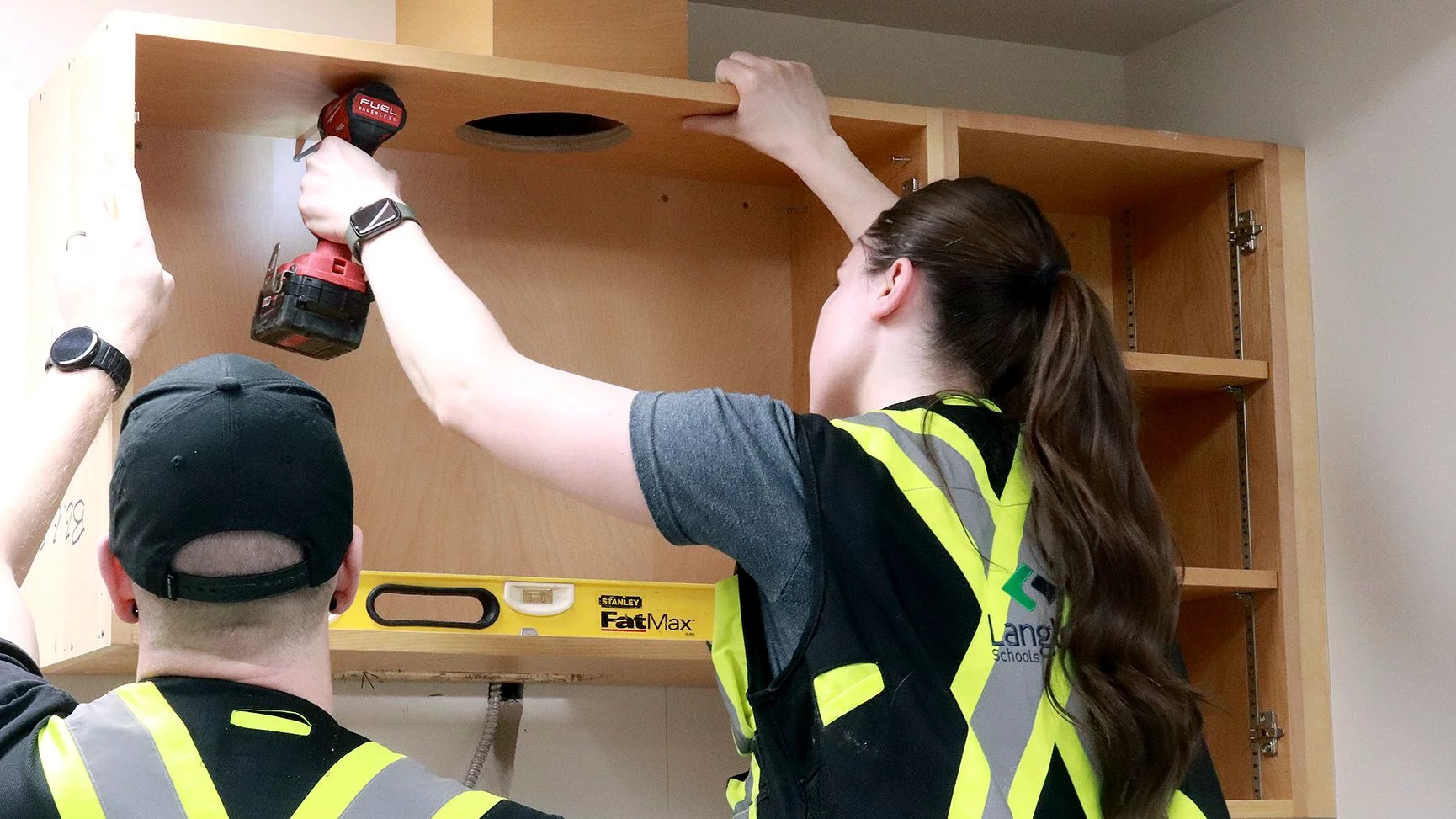
In addition to food preparation and delivery itself, another major part of the program is the behind-the-scenes work to expand, renovate, and improve kitchen and food prep areas and equipment in schools throughout the district. This year, Feeding Futures funding has supported a number of upgrades, including at Belmont Elementary (see video below), where district tradespeople installed a new kitchen.
“We support the student-facing staff, and we’re proud of the work we do,” said Nathan Olsen, Project Manager in the Facilities and Maintenance department. “Of course, we’re not the ones flipping pancakes and literally feeding the students, but none of it could happen without our support.”
Olsen also included school staff, administration, custodial and transportation staff as key departments that have worked together on the kitchen and equipment projects.
“Feeding Futures work requires a collaborative team,” Ellis said. “Tradespeople have been integral in several school kitchen upgrades. At the school level, each school runs their programs a little differently with slightly different offerings and models of support. Throughout the district, teachers, administrators, support staff, office staff, students and community volunteers are all part of the individual delivery and preparation system that may be happening at individual schools.”